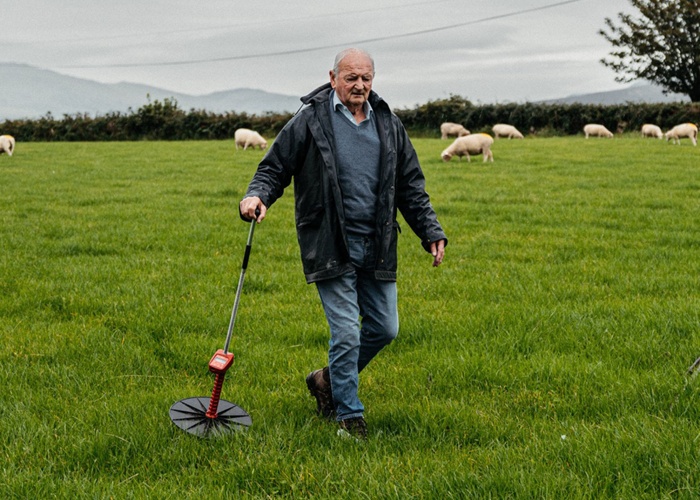
Alwyn Phillips, Pen y Gelli, Caernarfon.
Farm facts
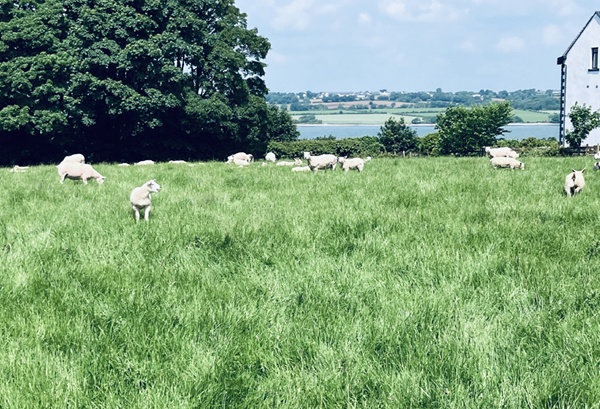
Penygelli is a sandy-loam farm which is home to 250 purebred and performance recorded Texels, 200 polled Dorsets and a 30 cow suckler herd.
Run by Alwyn Phillips and son Huw, they have a daily paddock grazing system and use mobile weighing apparatus to maximise lamb live weight gain from pasture. They have been performance recording the closed Texel flock since 1980 and have the flock with the highest muscularity in the UK. They sell performance recorded rams and encourage their buyers to look at the overall index of a ram and then to focus on individual EBVs to address specific traits. As a key contributor of rams to the RamCompare project, Alwyn is able to demonstrate the value of high index rams to commercial sheep farmers who are looking for well-muscled fast growing lambs that will perform on a grass-based system.

Those performance recorded rams are mostly sold direct from the farm so that buyers can see how their high health, closed flock thrives on the carefully managed grass-based system. Alwyn is passionate about producing quality meat from grass and selecting sheep genetics that perform well on a grass-based system, and believes that the two go hand in hand. Finishing lambs quickly also helps to reduce the farm’s carbon footprint.
The main challenge in terms of grass growth on the farm can be the rainfall in wet Springs on the heavier soil fields, especially for cattle grazing. Careful planning is needed to graze these areas later in the year to avoid soil damage. Alwyn feels that soil health and structure is key to grass growth and utilisation, and manages his grassland to look after the soil.
GrassCheckGB involvement
Alwyn has been involved in a range of projects over the years, and is always keen to improve and develop. He is open to giving new ideas a go and has also contributed rams to the RamCompare project since the project first started
He joined GrassCheck GB at its inception 5 years ago to understand grass growth and develop how best to manage it efficiently and further reduce inputs.

Benefits to the business since joining GrassCheckGB
Alwyn said: “By being part of GrassCheck GB, I have discovered the true potential of my farm to grow grass. It all depends on the soil, which is our most precious resource on the farm.
“By using the Agrinet software and recording data on a regular basis, I have more control over my grassland and can identify the fields that are performing well and not so well. I can therefore target any soil inputs needed and plan ahead for re-seeding.”
Alwyn measures the grass on his land on a weekly basis. “It’s a really good discipline once you get into the habit of doing it, it has now become second nature. I also get to observe the grass while I am measuring.”
The business has also benefitted by understanding what needs to be done to meet the livestock demand and take action to take a paddock out and cut it for high quality silage.
“I learnt the hard way that grass needs a rest when I changed from a set stocking system. I also changed the rotational grazing system by setting up hectare paddocks and moving livestock when fields reached the desired residual. I found this worked better for me than moving fences all the time. The residual changes in dry periods as I leave a higher cover to create some shade and then enable rapid regrowth when moisture is available.”
Key learnings since joining GrassCheckGB
The farm has been able to reduce costs by reducing fertiliser use by 50%, whilst also both growing and using more grass to finish lambs.
Alwyn said: “I feel that a combination of maximizing the use of grazed grass and selecting sheep that perform well on a forage-based system is essential, and a way to prepare for the possibility of a life without production subsidies. Developing this system takes time and improvements in genetics – it doesn’t happen overnight.
“I would encourage other farmers to embrace the benefits of sheep performance recording and developing grazing systems to produce high-quality meat from grass with minimal inputs.”